Inside the high-stakes realm of today's professional drifting, victory is not merely purely a result of raw horsepower or driver bravado. Rather, it has evolved into a multifaceted science that demands a painstaking marriage of choosing a inherently capable vehicle platform, outfitting it with the correct competition hardware, and, most essentially, grasping its live characteristics on the course through cutting-edge drift telemetry software. This definitive manual functions as your master plan from the very first idea of a competition vehicle through to the last telemetry-optimized tweaks that transform a powerful vehicle into a repeatable champion. We will thoroughly explore the precise engineering of vehicle alignment optimization, illustrating how a modern suspension tuning tool like GripDial eradicates assumptions and provides unparalleled insight into your chassis's actual performance.
The bedrock of any exceptional drift machine is, without question, the base vehicle itself. A select group of platforms have attained iconic status within the international sliding community due to their built-in weight distribution, robust design, and the vast availability of performance parts available. Selecting the correct platform is the primary and most significant selection a enthusiast will make. For instance, the the E36 generation BMW is widely regarded as perhaps the the finest balanced drift platforms of the modern era. Its almost ideal 50/50 weight distribution, combined with a rear-wheel-drive configuration and robust straight-six motors, creates a car that is simultaneously accessible for newcomers and incredibly capable in the control of a professional competitor. The evolution of this philosophy, the E46 model BMW, improves on these qualities with a even more sophisticated chassis, increased wheel track for greater high-speed stability, and yet more turning capability straight from the manufacturer. Another dominant platform in the pro scene is the C6 generation Corvette.
This muscle-derived sports car introduces a distinctive combination of benefits to the sideways sport, including a light aluminum structure, a backwards-positioned transaxle that helps create an excellent balance, and the immense thrust of a big GM LS engine. This combination makes it an absolute weapon on track, capable of starting and holding continuous drifts with relatively easy application of power. For drivers desiring remarkable value, the Nissan 350Z rises above as a excellent choice. It comes from the manufacturer with a rigid platform, a decent OEM limited-slip differential, and the responsive VQ35DE engine that provides ample performance for learning and advancing in the activity. Its newer version, the Nissan Z34, presents additional advancements in chassis stiffness, steering geometry, and outright engine output, solidifying its place as a common choice among competitive drivers. Additional historic platforms that merit consideration encompass the agile rotary-powered FC generation RX-7, the most popular Nissan S13, the American Ford Mustang SN95, the electronic-equipped BMW E90, and the tiny yet incredibly playful and teachable Mazda Miata. All of these platforms offers a different array of attributes, difficulties, and capabilities, but they all have in common the basic elements necessary to be transformed into a serious sliding vehicle.
However, choosing the optimal chassis is just the starting point. To access the true performance of every of these vehicles, significant modifications to the steering and suspension systems are completely non-negotiable. This is where the world of performance drift-spec components comes into critical importance. The most most impactful improvement for a serious competition vehicle is the installation of a high-performance drift angle kit. These engineered systems, such as those manufactured by specialist companies like SLR, are created to significantly enhance the vehicle's maximum lock-to-lock rotation. A OEM production vehicle is highly limited in how far its tires can turn, a safety compromise for on-road operation. In drifting, conversely, maximum steering input is constantly needed to catch and maintain a drift. An angle kit exchanges the OEM steering knuckles, rod ends, and potentially suspension arms with components that enable the front tires to attain steering lock in excess of 70 or even 80 degs, compared to a typical stock angle of around 40 to 50 degrees.
This immensely expanded lock offers the driver with dramatically greater command during a slide, making it much easier to initiate a oversteer moment, hold it through a long turn, and switch seamlessly from one angle to the other. The difference in drivability is absolutely profound. Coupled with a correctly specified modification is the every bit as vital modification to the car's spring and damper setup. Off-the-shelf or including expensive sport dampers are generally not engineered for the specific and brutal demands of competitive oversteer. A drift-spec pair of coilovers is paramount. These engineered dampers feature unique damping rates and spring strength that are designed for the rapid weight transfer that is characteristic of drifting. When a driver initiates a angle, the car's inertia is thrown rapidly to the outside of the turn. Optimal drift-spec suspension handle this shift in a controllable fashion, permitting the car to stabilize promptly and providing the operator precise feedback through the wheel and seat. They furthermore provide exact setting of ground clearance, shock absorber firmness, and corner weighting, which are all key aspects of dialing in the vehicle's handling to a specific venue or driving technique. As a system, a high-quality angle modification system and a expertly chosen set of performance adjustable dampers form the core hardware base upon which all future optimization is constructed.
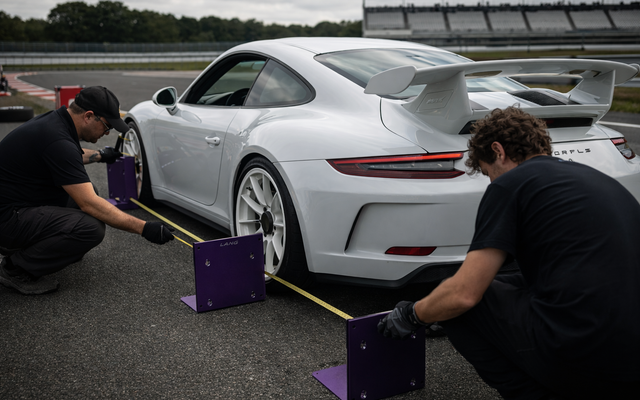
Once the essential hardware is in place, the following essential phase in the build is the detailed adjustment of the car's alignment. This is the domain of vehicle alignment optimization, a process that can feel daunting to the beginner but is, in reality, the key to turning a assembly of high-performance pieces into a harmonious and consistent vehicle. The most critical element of alignment for oversteer is definitely camber angle. Wheel camber is the tilt of the tire compared to the upright axis when viewed from the front of the car. If the top edge of the tire is leaning towards the car, this is referred to as camber-in. For oversteer driving, negative camber on the front axle wheels is universally employed and is considered critical. The reason is intrinsically related to tire contact.
When a chassis is turning at limit sideways angles, the frame leans to the outer of the corner. This lean causes the outer front tire to diminish its ideal grip area with the asphalt. By applying an inward tilt, the wheel is pre-angled to account for this tilt. As the chassis tilts into the bend, the outside front tire becomes more upright on the asphalt, optimizing its grip at the critical point when it is most required for directional command. Commonly, front axle angles for a serious drift machine range from approximately -3 degrees to as much as -5 degrees or even more, depending on the parameters of the chassis setup, tire choice, and operator preference. The back wheels also use negative camber, but the angles are typically less and more nuanced than the front axle. Overly aggressive inward lean at the back can cause the vehicle to overly prone to oversteer and difficult to control on acceleration use, as it reduces the usable tire footprint of the powered tires during straight-line throttle application. Thus, rear axle adjustments are commonly in the range of -1 degree to -3 degrees, striking a delicate balance between providing enough cornering grip to aid in initiating and holding the slide while also maintaining good grip for acceleration the bend. camber angle is only one component of the broader tuning puzzle, which furthermore includes toe, self-centering steering, and bump steer adjustment.
Toe setting refers to the angle of the wheels as seen from the top. Inward toe means the front edges of the wheels are closer together than the trailing edges, while negative toe means the reverse. For oversteer, a small amount of front toe out is often used to improve the initial response directional feel, making the chassis feel more agile and eager to begin a drift. Rear axle toe angle is generally set to neutral or a incredibly minute amount of toe-in to encourage stability under power. self-centering is the longitudinal or rearward angle of the steering axis when viewed from the side of the vehicle. Positive caster angle enhances self-centering and stability solidity, and it furthermore adds to inward lean gain during turning, which is extremely useful. Setting these values is a complex interplay where a change to one value can and will influence the remaining parameters. The old-school process for tuning a car's suspension geometry for sliding has long been a labor-intensive affair of guesswork and adjustment. A driver or engineering group would apply a adjustment based on a hunch, run the vehicle on track, rely on the operator's subjective feel and impressions, and then make an additional change. This process would repeat time after time until the car felt "right" or the available practice time was exhausted. This system is not only exceptionally slow in terms of man-hours and resources, but it is additionally fundamentally inaccurate.
Pilot sensation is a notoriously inconsistent measurement tool, colored by countless variables such as tiredness, evolving track surfaces, weather, and simply the mood of the driver on that specific session. coilover setup tips What feels "tail-happy" on one pass might feel "tight" on the subsequent lap, causing confusing data and frustrating changes. This age-old challenge in vehicle dynamics optimization is precisely where state-of-the-art telemetry systems has made its mark to completely change the methodology.
The rise and integration of advanced suspension tuning applications has introduced a radically different age for engineering and perfecting competitive drift cars. These platforms, exemplified by groundbreaking products like GripDial, function by directly capturing the actual mechanical behavior of the chassis as it is operated on the circuit. As opposed to relying on subjective feedback, these devices acquire measurable data on key factors such as damper compression and extension, wheel speed, G-force loading, lock position, and accelerator and brake pedal position. This collected telemetry is then processed by sophisticated algorithms that can plot and decode the metrics in a actionable manner. For the very first time, engineers and teams can visualize specifically what the vehicle is exhibiting at any given moment of a lap. This capability revolutionizes the complete suspension tuning process. Think about the particular challenge of setting the front camber for a specific car. Rather than making a adjustment from -3 degrees to -3.5 degrees and then testing many passes to try and "sense" a change, a vehicle dynamics tool can give instant and definitive feedback. The tool can show visually how the tire's loading is performing during the key phases of a drift: the initial flick, mid-corner, and transition. It can demonstrate if the current value is allowing the outside front tire to maintain maximum contact or if the rubber is overloaded on its outside shoulder.
The system can then make data-driven recommendations for change. Perhaps the data shows that the outside front tire is even stressing its sidewall at -3.5 degrees of negative camber, implying that an increase to angle, say -4 degrees, might be warranted. Conversely, the data might reveal that the tire is not reaching optimal operating temp or that the inside shoulder is wearing excessively, which could indicate that there is excessive angle and a modest lessening back to -3.2 degrees would be more optimal. This level of granularity and practical insight was literally impossible in the era of exclusively mechanical setup.
The benefit of utilizing a dedicated suspension tuning tool reaches far beyond just optimizing camber angles. It functions as an invaluable coilover setup tips that is customized to your exact car. When fine-tuning the rebound and compression values on your adjustable dampers, instead of depending on imprecise guidelines or copying another car's setup, you can drift suspension tuning guide use the telemetry to analyze how the vehicle is performing in reaction to your tweaks. The tool can show the suspension travel data over a run, revealing if the coilovers are handling the body movement effectively or if they are drift tuning app causing the chassis to bounce uncontrollably after a flick. It can assist in diagnosing challenges like hitting the bump stops or excessive extension, enabling you to introduce educated choices to preload settings, damping rates, or ride height. This process translates similarly to the complex process of corner balancing. Beyond camber, the system can offer data into how changes to toe settings and caster angle are impacting the chassis's stability during specific phases of a lap. For example, it can help you to ascertain the best amount of front negative toe for your individual steering rack configuration and competition style by analyzing the response time of initial response and the predictability of the chassis at full lock. This transforms the system an extremely powerful vehicle dynamics manual that is constantly calibrated by the real-world performance of your specific car on the circuit. It shifts the whole project from a dark art into a methodical development exercise.
Furthermore, the value of a platform like data acquisition is not limited to expert tuners with large funding. For the club-level competitor, it acts as an incredible equalizer. It in essence offers the builder with the insight of a professional dynamics engineer without needing the corresponding overhead. It drastically shortens the learning curve by providing clear answers to questions that would otherwise take seasons of experience to understand. A driver can learn how their specific chassis responds to different inputs, gaining a more intuitive knowledge of suspension theory in the journey. It furthermore makes accessible advanced chassis dynamics principles, allowing anyone with the drive to perfect their machine to achieve it in a systematic and effective manner. This is particularly significant in a activity like sliding, where tuning knowledge has in the past been a highly secretive asset among top crews. In the modern era, that capability can be in the hands of every serious enthusiast.
In the final analysis, the path to engineering and tuning the ideal championship-contending drift car is a multi-stage endeavor that smoothly combines proven hardware wisdom with cutting-edge telemetry tools. It begins with the wise selection of a legendary platform, then built upon the integration of critical competition components like drift-spec steering angle kits and correctly selected competition suspension units. The journey then moves into the intricate stage of chassis dynamics adjustment, where parameters like camber angle, toe, and caster are precisely set to match the car's new geometry and the driver's individual needs. Finally, and what genuinely differentiates the modern methodology from the past, is the adoption of a powerful drift telemetry software. This tool eliminates the approximation and inefficiency of purely seat-of-the-pants setup by providing objective, live information on how the car is actually performing. It serves as an indispensable diagnostic aid, a definitive drift suspension tuning guide, and a comprehensive vehicle dynamics tool. In unison, this complete methodology ensures that all component of the drift car—from the choice of the chassis to the most minute click on the coilover—is perfected for maximum performance on the circuit. It signifies the full evolution of the sport of sliding, merging physical car control with precise vehicle setup to build the ultimate competitive cars imaginable.